July 4, 2026
DIALOGUE ABOUT BLACK - WITH ANĐELA VUKOVIĆ
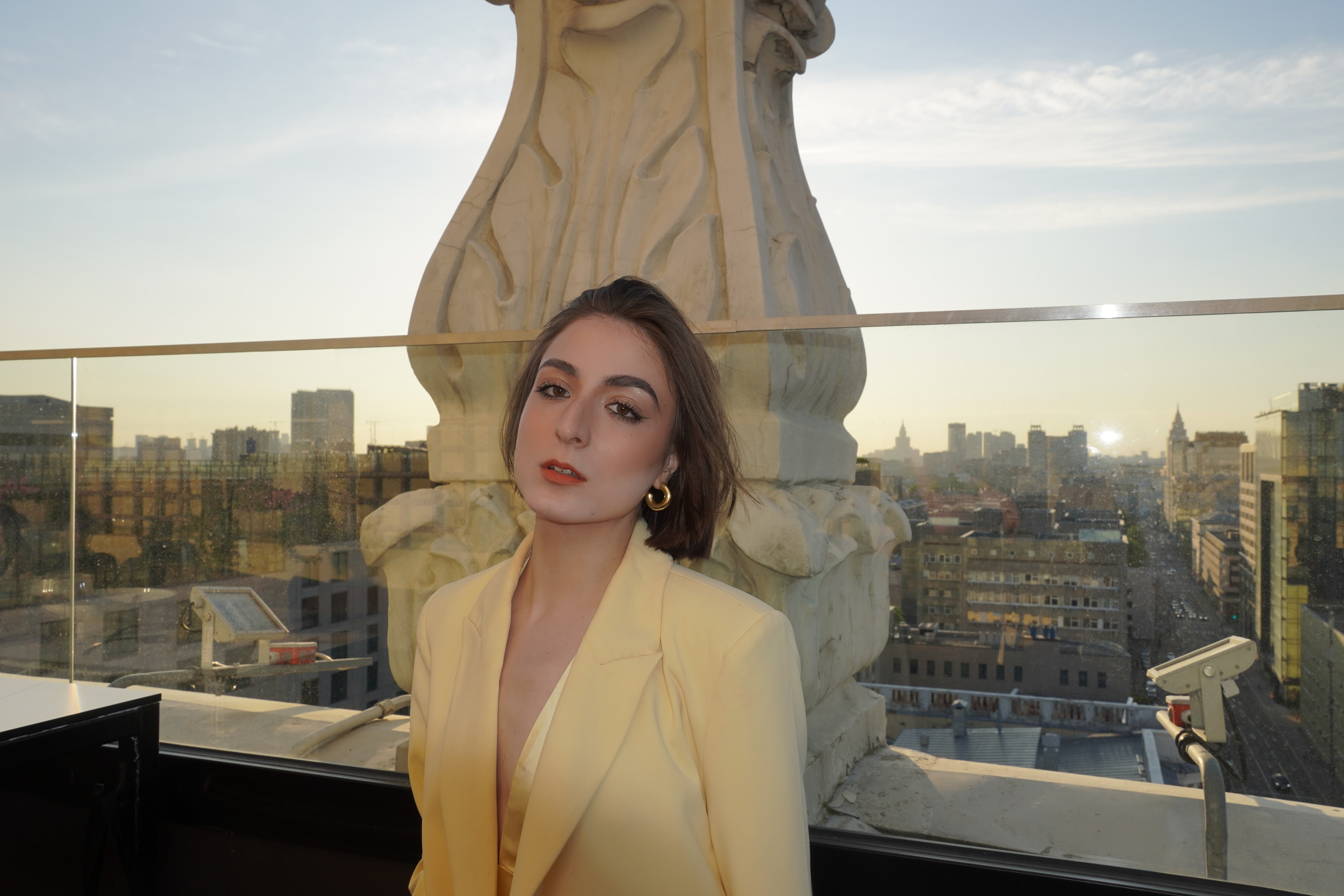
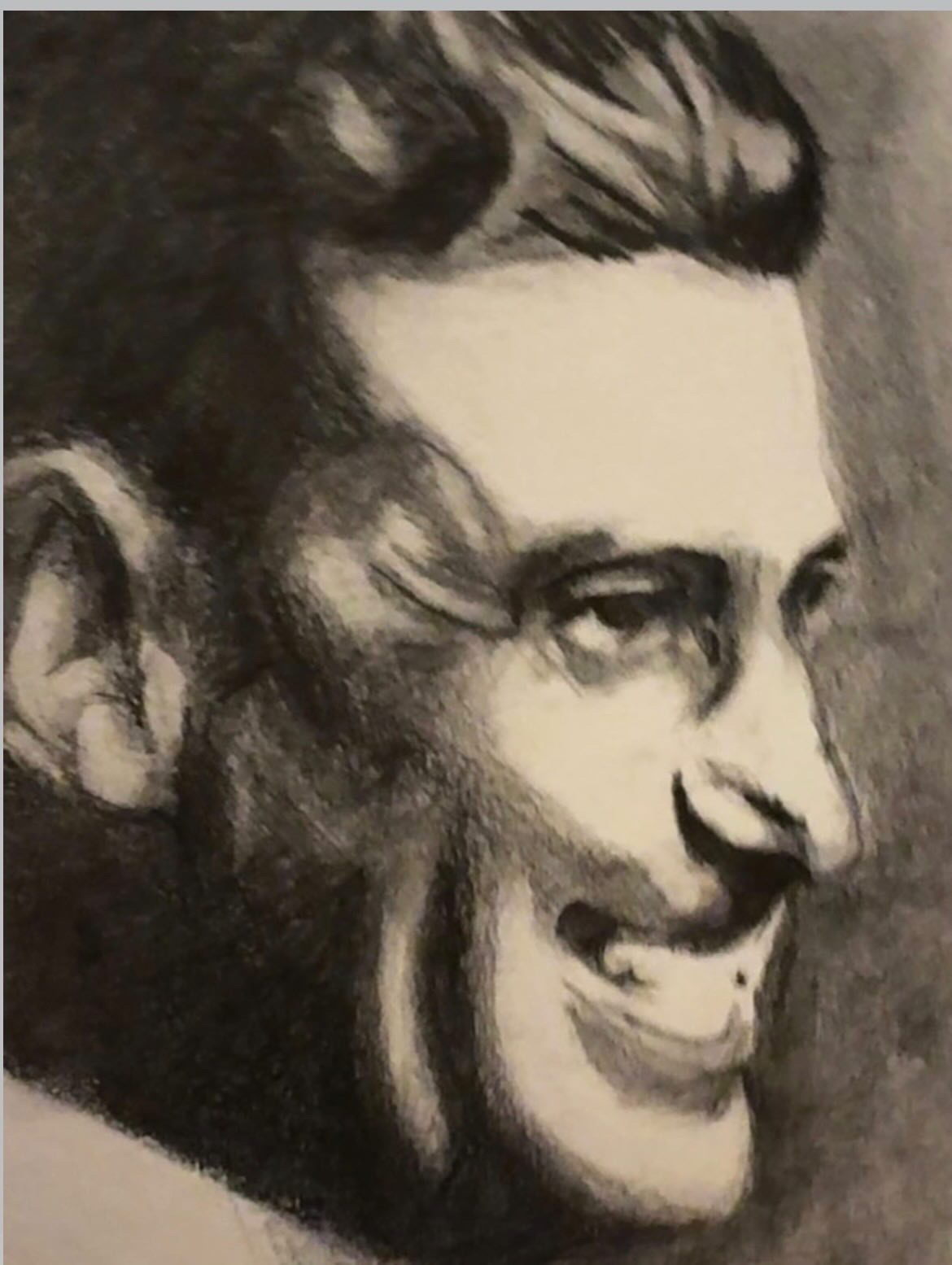
A.V. How do you understand the philosophy of Sumatra?
At the beginning of the year, I sat down and read the polemical magazine Gradac: Slućaj Crnjanski, no. 237, 238, 239. The philosophy of Sumatra was initiated by Crnjanski. However, that fraternity of faces could be placed more broadly and exposed to criticism. I don't want to be the only one worthy of speaking highly of that legacy. His, and ultimately no other, legacy cannot be dislocated from its historical context. He wanted very much not to go to Serbia as an Austro-Hungarian officer but to Russia. Philosopher Žarko Vidović did not praise Sumatraism. I heard that from the greatest. For us as liturgical beings, prayer is a paramount need precisely in the fight against plagues, which at the same time were part of Miloš's inspiration and tragedy. Crnjanski said that Serbs will appear before God with bloody hands. We came out bloody from head to toe. Perhaps Sumatraism unites nations, but not Serbs (according to that logic). This is where Crnjanski's main criticism lay, that he is anti-Semitic and a Nazi, although after returning to Belgrade he presented himself to the public as a Crnjanski-Rankovic right-winger.
A.V. What do you think, was Russia really a refuge for Serbs or an unattainable myth and illusion?
Russia is for me personally and for us Serbs: vsë. For some Europeans today it may be: "Russian nothing". Someone in Serbia coined a wise saying: "Russia is the mother, and Serbia is the Motherland." I would like it to be the same with the Russian brothers for us. Indelible is the sacrifice of the Tsar-Emperor, as well as the Russian volunteers in the creation and defense of the Republika Srpska. Kievan Rus is the birthplace and birthplace of Russia. I don't tend to oversimplify. Holy Father Sava began his monastic exploits from Rusik. We would not have the vision of one Metropolitan Mihajlo Jovanović of Belgrade, nor the man-army of St. Nicholas if there was no Russia. Both nations remember and share that. What we may forget is that the bigger always helps the smaller and weaker. The parable of the big ship and the little ship is well known. We need a renewed, stronger alliance of two peoples and two countries in a time that in exaggerated categories resembles the old century. Cooperation and solidarity of youth and intelligence with the inexhaustible wealth of the Russian soul and state. Gone are the days when creators were created to create. Initiatives and solidarity are incidental and conditioned by indiscriminateness and bad personnel policy today, which does not recognize values and people. Russia is a refuge, not an illusion. I cannot speak briefly and easily about the word "myth" because it is multidimensional and deep.
A.V. Do you think that "A Novel about London" is the pinnacle of his creativity? It is a consequence of his life and work in London and more. The ontic gap of lyric, epic and drama in the existential depths. Personal metamorphosis translated into a novel. Through Prince Rjepnin, he described all the real and semantic weaknesses and sufferings of the homeless. The eternal wandering of the rejected who are the salt of the world. He described in a masterpiece the misery of a great spirit on the margins far from the east. The lyrics of Ithaca were also avant-garde. Between the two wars of "Ideje", texts about St. Savi, were apostles of hope and Prometheus of future misery. "The scenes and symbols surrounding the burning of the relics of Saint Sava are closed in that eternal circle that signifies the secret strength of Serbia that could weaken." (On nationalism and the Serbian population). These words are ubiquitous.
A.V. Do his heroes lose their national identity through all their migrations?
Milos' life and language is unique in everything. His pronunciation of poems, and even the novel about London, is special with the accompanying and specific pronunciation of the letter -R-. The biggest ones remove the big ones themselves. Dobrica Ćosić personally expressed to Crnjanski his satisfaction with his return from London, to which he replied: "You are the least happy because now there is no first or second, there is only the first." It is understood that the presence of Krleža and Andrić was crucial. It's all an afterthought, but it's not insignificant. I think that Crnjanski did not lose his national identity through personal migrations. In this sense, his characters did not deviate either. They do not wander from their core and do not lose their identity despite war, wandering and meaninglessness. It's actually the only constant. However, they are in icy solitude like Faust. It varies, but basically it does not lose a thread that cannot be described by subsequent memory.
B.V. Are you enchanted by Crnjanski?
- Yes. I believe that great writers like Crnjanski have the power to bewitch the reader, and draw him into his world from which it is difficult or never to get out. In particular, Crnjanski very easily wins over the reader who is ready to surrender to him and understand him. Whether you like him or not, it seems to me that there is no middle ground, and anyone who likes him, becomes fascinated by both his character and his work, because all that is Crnjanski himself are his works, although for a writer, I guess that implies that he weaves himself. He really puts his life in the palm of our hands by shaping it through a melodic sentence and that recognizable set.
B.V. Crnjanski is a man of history but also of consistent contextualism. If you could ask him if he is happy, what do you think he would answer in his poetry or prose?
- Perhaps the most difficult question, I thought for a long time about what I could answer, because first of all you have to imagine what happiness is. Everyone could give their own definition, but I am not a supporter of defining emotions and I will be free to say that Crnjanski would not do it either. Although I am a bigger fan of his prose, I think that Crnjanski would respond with poetry. I can explain it, first of all, certainly as a literary expression, poetry is more honest, because everything he wrote is an expression of his emotions and understanding of happiness in a moment of creative rapture, how happiness is not a constant, but a periodic burst of emotion, through his creativity we could extract waves of happiness and the basic themes that caused him that happiness and give an approximate answer, although I believe that if I could sit down with him, his answer would surprised.
B.V. One trait of genius is characteristic of Crnjanski, Pekić and their ilk, and that is uncompromisingness/stubbornness. How important was she to him?
- It seems to me that for Miloš Crnjanski and Borislav Pekić, "stubbornness" was not spite, it was their moral compass and engine of creativity. Their creative path was similar, and perhaps that "stubbornness" contributed to it. Both writers did not agree to ideological compromises, they often had strongly opposing views with the political currents of the time, and their uncompromisingness brought them many enemies. Both paid a high price for their intransigence. Crnjanski spent decades in difficult exile in London. He did manual labor to survive, but he never gave up his literary and life principles. While Pekić was imprisoned for years because of his anti-communist activities in his youth, he turned that difficult period into his greatest literary works. In the end, I would say that what seems like an obstacle or a flaw to an ordinary person, in great people it is lost in genius and helps them stay consistent with their ideas.
B.V. We hear from writers and journalists in Serbia, who knew him personally, how Crnjanski came from exile as a grizzled old man, more receptive to football and lamentation than to writing and life. In that sense, Crnjanski is a collective paradigm and metaphor. In your opinion, are these two disciplines still the main ones in Serbian society today?
- Crnjanski is primarily a personality that should not be defined so easily, I will give myself the right to say that no one should do that with any great personality. His greatness, in addition to his incredible creativity, is also a complex personality. Primarily, he should be seen as an ordinary man, regardless of the fact that we Serbs have a tendency to idealize great historical figures, which Isidora Sekulić also talks about in the essay: "The problem of a small nation" (1932). She writes about the tendency to idealize prominent figures. He states that in our country there is a need for exceptional individuals to be perfect in every respect, i.e. to be not only smart, but also good and beautiful. I want to state this very thing because it seems to me that it has not changed even to this day. It is to be expected that Crnjanski, after a difficult life and growing up, cannot and should not be the same person he was. When we talk specifically about football and lament (longing for the past), these are not just metaphors for Crnjanski. It could be said that this is the general state of consciousness of the Serbian people even today. Football offers immediate excitement and emotion, and lament serves as a collective emotion and a turning to the glorious past whenever a difficult period comes. Crnjanski, like every man, had the need to fit into a society where these norms ruled, but also to rest. An artist is not a machine, he needs to live, and Crnjanski himself began to breathe, returning to his roots. We have a mass psychology - football unites people, while lament provides refuge and security in the past. But this continues in our society because of the fear of change. Our society is not prone to change, it is easier to cheer and rejoice or regret and glorify the past, than to think about the future.
B.V. We also have professors who have built entire careers on Crnjanski, but they consciously manipulate it - with Crnjanski's thought and work. I did not accidentally mention Pekić. In your opinion, and to what extent, is the late Pekić democratic maxim also valid for Crnjanski: Democracy and nation - YES! Democracy or nation - NO!
I strongly condemn the misuse of Miloš Crnjanski's character and works (not only him, but let me dedicate myself to him now). It seems to me that many define Crnjanski exclusively through the prism of his political views, from the interwar period, ignoring everything else related to this writer. His love for the nation was never hatred for others, which can be seen through his works (if they want to read). He had a healthy, natural desire to preserve his own identity, which is a normal need of a member of a nation. As for the maxim itself, it perfectly suits Miloš Crnjanski as well. For Crnjanski, the nation is an organism that cannot live without democracy, i.e. the way of free life of that nation, one cannot do without the other. We can explain it through his works, Crnjanski would certainly not accept the sacrifice of human freedom in the name of any ideology, it is precisely his heroes who suffer because of other people's political interests and injustice.B.V. If Crnjanski was a punctuation mark, what would it be?
- Excellent and very interesting question, which immediately put a smile on my face. I think we would all agree that he is a comma. With Miloš, commas are a stylistic sign, not a grammatical rule. He uses them very skilfully and not by accident in order to slow down the rhythm, break logic and impose his emotional experience of the world on the reader. He uses commas to create the impression of breath and pause. Each part of the sentence separated by a comma is like a new picture. The writer himself said that the "desire for logic" and the desire to impose the will of the writer on the reader are the main reasons for him. It is not always easy to read, but it gives works like "Movement" or "Dnevnik o Čarnojević" a unique atmosphere.
B.V. Is any recommendation of the smartest to young people, in conflict with the "old" monopolies and worldview, worth it?
- Every wise recommendation is valid, it can always serve as a compass. The clash of generations is a normal process. Young people bring cheerfulness and changes, while the old keep the established system and tradition. Wise people have gone through similar struggles in life, and their advice can help young people to go through similar situations more easily, and perhaps get out of that labyrinth more easily. Monopolies slow progress, but new ideas from the wise and innovative light the way to a new future. Also, every obstacle is as bad as it is useful because often our mind can think more clearly only then. It is the same as the censorship of writers, for example, if something had not been banned in the past, we might never have gotten a different view on a topic, because the writer wanted to express his thoughts, and had to find a solution.
B.V. What is the title of your paper about Crnjanski? What are the main topics and themes you deal with and what conclusion do you bring with you in the recognition of your work at the prestigious Faculty of Literature in Russia?
- My work is called "Image of Russia in the prose of M. Crnjanski". The paper analyzes the cultural phenomenon of the image of Russia in Crnjanski's prose, with a special focus on the novels "Roman o London", "Movements" and "The Second Migration Book". Using an interdisciplinary approach, it is revealed how the writer shapes the space of Russia's identity - from the mythical land of salvation to the space of melancholy, alienation and unfulfilled aspirations of his characters. Analyzing the literary process and historical context, the paper points to a deep emotional and philosophical connection between Serbian migrations and the Russian cultural code. The goal is to shed light on the specific function of this motif, symbol and ideological meaning that Russia has for Crnjanski's tragic heroes. The use of the comparative method in this paper contributes to a better understanding of the place of Russian culture and history in the formation of the melancholic discourse and the specific historical vision of Miloš Crnjanski. This work is not only important for me, it has great importance in the promotion of Serbian culture and Miloš Crnjanski himself in Russia, which was certainly my main goal.