October 11, 2026
An experience that transcends life
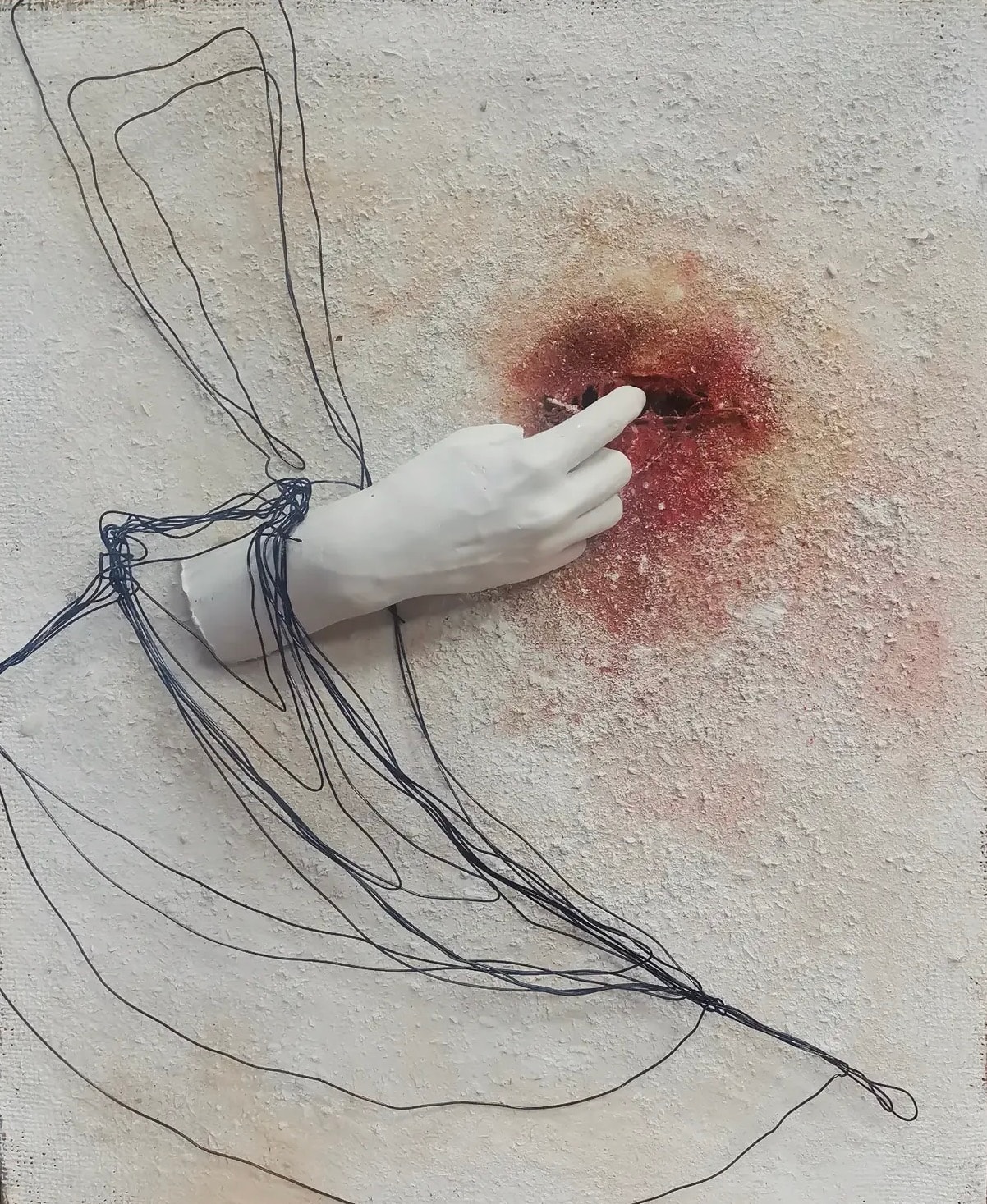
Dmitri Shostakovich wrote on the backs of scores the ringtones he would have heard, behind the Iron Curtain but also before it, behind the scenes, as an observer and participant, bells after but also before the October Revolution. The bells were an integral part of his symphonies, not just parentheses and backs. Thanks to this, many destroyed temples will later receive, after the era of socialism, bells in the same tones that adorned them. Shostakovich with the fifth symphony describes the strained relations and conflict with Stalin. The eleventh symphony in its scores records the bells that rang out from the churches and monasteries of Imperial Russia in 1905 in St. Petersburg, during the suppressed demonstrations. The sympathetic and witty paradigm of his notes, which at first testified to the attachment to the fall of the tsarist power and the arrival of the Bolshevik one, becomes the litmus paper of a separate life of an experience. During my studies, the bells of the Belgrade Cathedral were my soul food and spiritual landmark. Like a lighthouse that warns and calls in the distance. On nights young and not so long ago I listened to them every 15 minutes. On the backs of the scores of the First Belgrade Singing Society, I recorded what Shostakovich was doing in his time.
That an independent and meaningful life is lived by creativity/experience that touches God, the 11th symphony tells us. Author-man-personality, both repeatable and unrepeatable. If there was no repeatability, he would never create unique works. In addition to the author, his experience (Russian word for art) - what he creates; on the other side, God, the immovable mover, without pre-understanding, pre-understanding and post-understanding, the One who is unconditional, the One who creates from his positions and in his strange ways reaches the human experience, to the human personality, in which there is no prejudice, no control, but everything is as he imagined, freely.
For humans, situations are opposite according to various criteria. A multitude of the unconscious, a multitude of the unconscious within and around you. National, local, family and others, which is why even under Stalin, Tito, and even today, only two or three percent of the population is generally involved in art, painting, theater, and culture. The psyche of repressive and totalitarian regimes was to suppress in their experience and about their money and their nature, at the expense of government, culture and art, because it is human experience, which is art, because culture is unpredictable in its sequences and its unconscious. Hence, the paradigm of the bell that will announce the end of one government and the arrival of another that will turn them to ashes, are at the same time a divine echo written in the form of a testament in sheet music.
Unpredictability is more distant from the creator and author, although it is hinted at and foreboding. As if it were a divine plan and inspiration. She is free because she was created from an icon created by an icon, unforced and uncondemned to necessity and ruin, and on the other hand, she is an author, unfree to be free and unrepeatable, in situations and environments created by events and personalities who want to control history and experience, art and creativity, science and word.
What else makes art/experience, genius a double-edged sword? Because it is in itself the bearer-Creator, the owner of the boundary threads, the initiality for the possible detonation of the personality. Beneficially, creatively, he can contribute to humanity as such, but as a deviant personality, if he is pressed and showered with the wrong direction of the energy of the unconscious extreme, he will not be useful. Nevertheless, this tragedy of genius happens if he does not build his experience in himself and around him in such a way that Art or Science protects him, as it protected the rocket scientists in Nazi Germany and after the war. In the collection "Jacquard", my first collection of poetry, there is talk about the poem "Transmission", inspired by the rich life and work of a great Serbian personality, an academician. Where the transfer of the relics of Štiljanović, Lazar and other Serbian Saints is described, by an academician, a priest, a historian and the dean of the Faculty of Theology in Belgrade - Radoslav Grujić. A wonderful example of the longevity of an untimely and brave procedure.
The personality of Grujić, who is in a reasonable way in his personality, righteous and truthful, Nemanjic and Orthodox, manages to transcend the senselessness of evil and war and unite the incompatible: Nazis, Nedicians, Ljotićians, soul hunters and satraps. On the other hand, ordinary people of Serbian origin and Serbian people, the people of Svetosava, carpenters, builders, who should have made sure that our cultural heritage, relics, shrines, and history in one place were not overrun by fire like Sava or the bells of imperial Russia. Only Tsar Dušan in St. Mark's Church in the First Throne of Belgrade was preserved, so it is enough from one historian and the dean of the theological faculty.
So, when a person does a good deed, it can be a role model for others on a personal level, but when he does a national good deed, it cannot remain without someone crying in prayer over it, kissing the kivas and mourning the sacrifice in their own cross-bearer. Anyone who would not interpret the poem "Transmission", and rarely anyone who is inclined to interpret poetry in the way Crnjanski did, may misunderstand both the view and the description of the soldier. If he knows who is at the parade, who are the soldiers, but at the same time that such a person had to bow his head in front of the holy place, in front of the relics of the saints and bloodthirsty villains, of the ideology and biology of the people, he heard the blasts fired. Church bells, great and timeless deeds, but also significant words have their own separate life to this day. By its textuality and meaning, by its meaning when read, it should resemble the composition "Shirshaja nebes". As is the case with the best and most beautiful song in the 20th century in Serbs: Look at the home of your angels. When performed together with a symphony orchestra, a mixed choir and a whole suite of rockers with electric guitars and a rhythm section, there is no living thing that will not give you goosebumps.
Thus, Shostakovich, as the first in this series, came to the fore again as the latter, repeatedly unrepeatable. During the performance in Paris in March 2024, the young, multi-talented and wonderful conductor Andrej Feher led the last act of the symphonic symphonic performance of the last bars of the 11th symphony (Year 1905), which ends with the very sound of the bell. At that moment, the bells from the St. Marcel Cathedral in the 13th arrondissement continued the melodic sequence and extended instead of the instruments. The symphony is performed for almost exactly one hour, so the bell ringer decided to accompany the concert. Aware of the miracle that the symphony performs on its own after so long, the audience was delirious and the musicians and conductor were delighted. I'm glad that the cancel culture does not leave him out of the repertoire of European stages because he is worthy of the greats who create miracles with their works. So much,